Posts tagged Traditional
Bakeover: Chocolate Chip Ripple Cookies

“OHH, you didn’t have to — really, you didn’t have to. I’m used to just bringing my own meal.”

I used to hear this all the time from my friends with food allergies or preferences when they’d come over for dinner. They’d sit with their sad little grocery store takeout containers while the rest of us feasted on homemade meals and desserts every Tuesday at our community group gatherings.

And honestly? I hated it.
What kind of hostess invites someone to dinner and then expects them to just watch everyone else eat because the menu isn’t allergy-friendly? Not the kind of hostess I want to be.

Before what one of my favorite YouTubers calls The Great Unpleasantness (you know the one), I cooked and baked constantly for various get-togethers — Tuesday night dinners with gluten-free friends, Wednesday girls’ nights that needed baked goods without eggs or milk. I loved it, but after a while, I got tired of the same three allergy-friendly cookbooks and the endless substitutions.

I wanted Ina Garten’s brownies.
Gesina Prado’s focaccia.
The “real” recipes — but made so that everyone could enjoy them.

So I did what I always do when something doesn’t sit right:
I went to the kitchen.

🍰 Introducing: The Bakeover

That’s when the idea for Bakeovers was born.
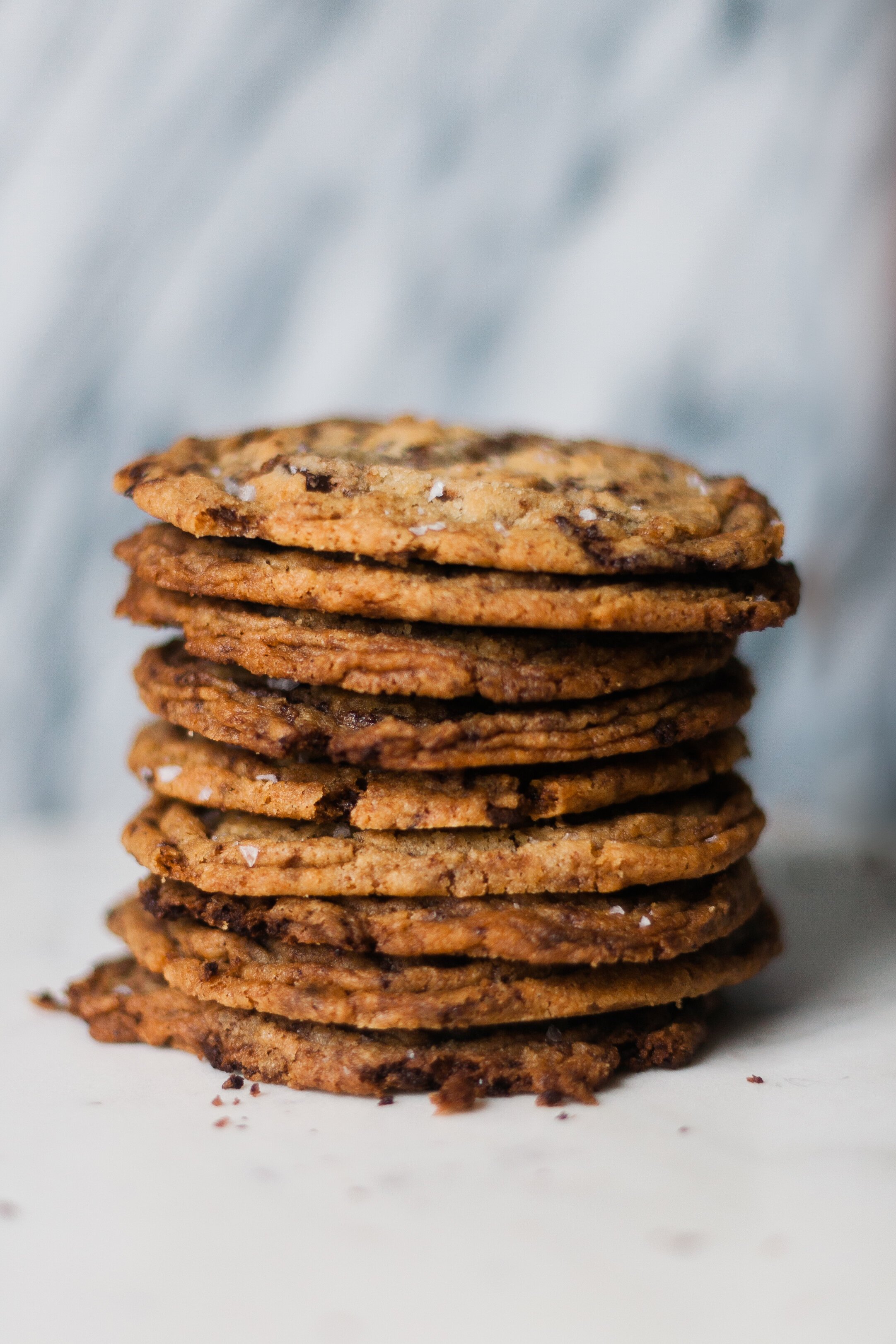
A Bakeover is my take on a recipe makeover — taking beloved, traditional recipes and transforming them into inclusive versions that everyone can enjoy. Gluten-free. Dairy-free. Vegan. Friendly for every seat at the table.

At first, I didn’t tell anyone what I was doing. I just served the food and waited.
To my friends with allergies, I’d say, “This one’s [insert their name here] friendly.”
They’d smile, dig in, and every time someone said, “Wait… this is gluten-free?” I knew I was onto something.

Bakeovers are my way of saying: no one should have to bring their own dinner.

🍪 Our First Bakeover: Pan-Banging Chocolate Chip Cookies

Intriguing title? ✔️
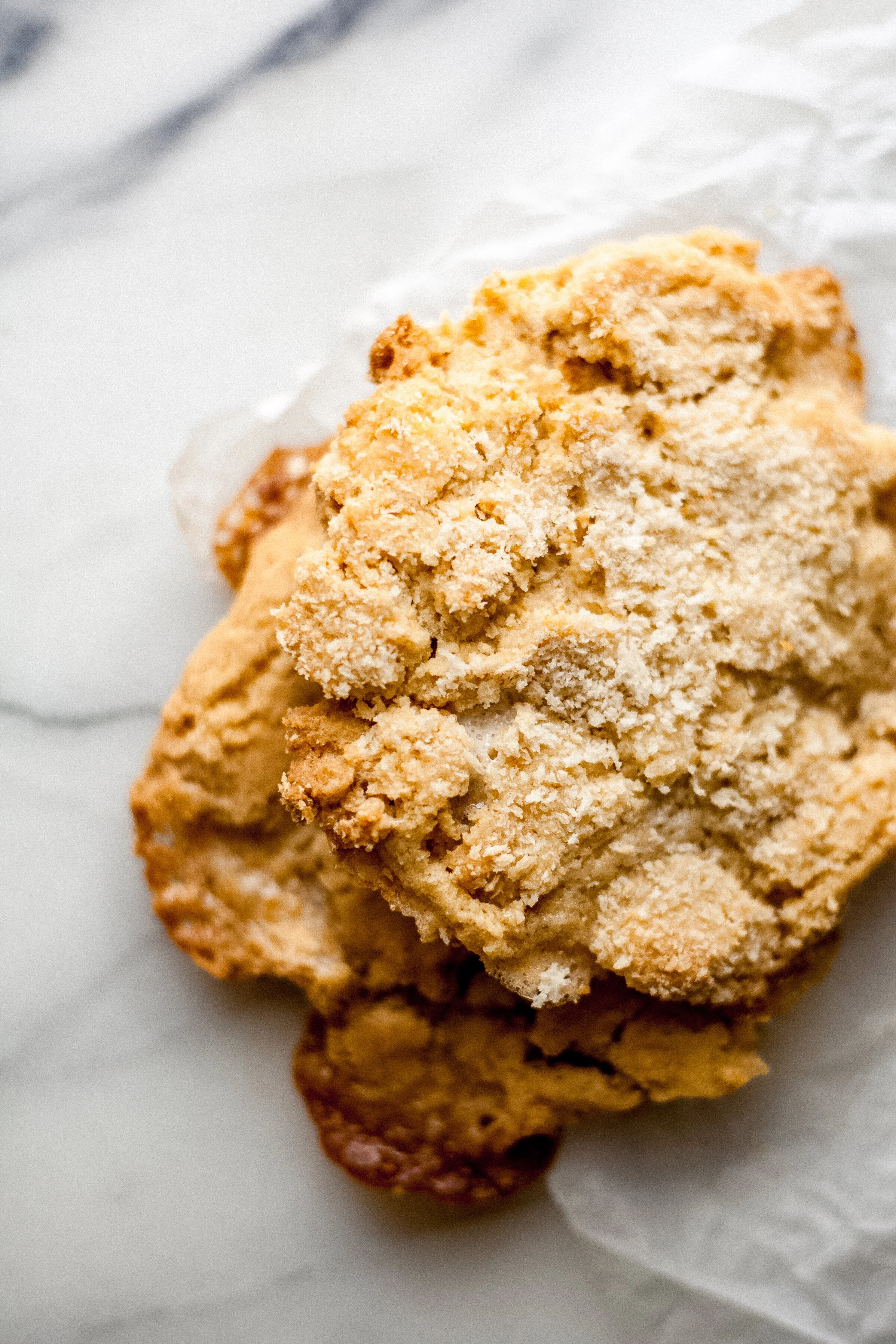
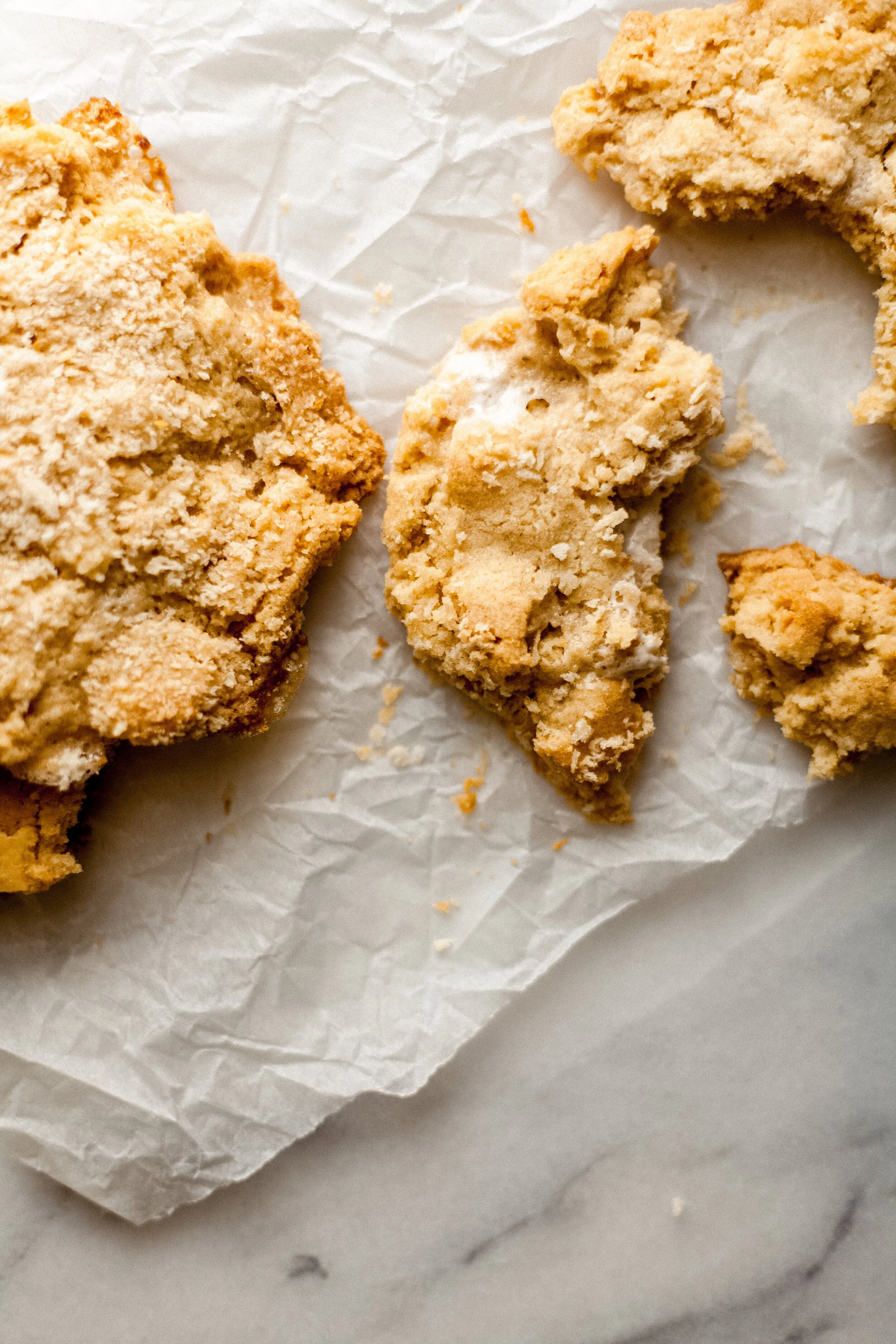
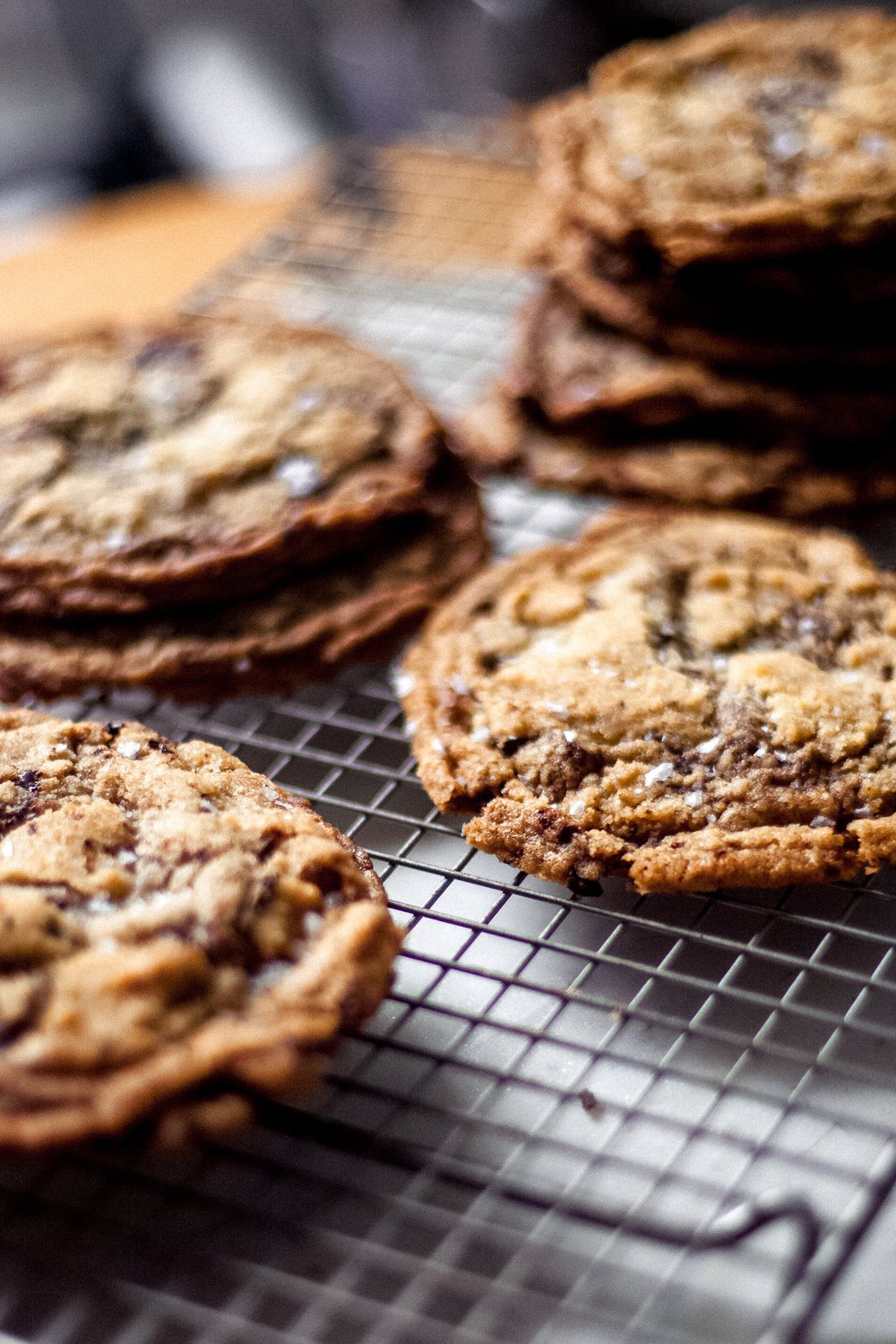
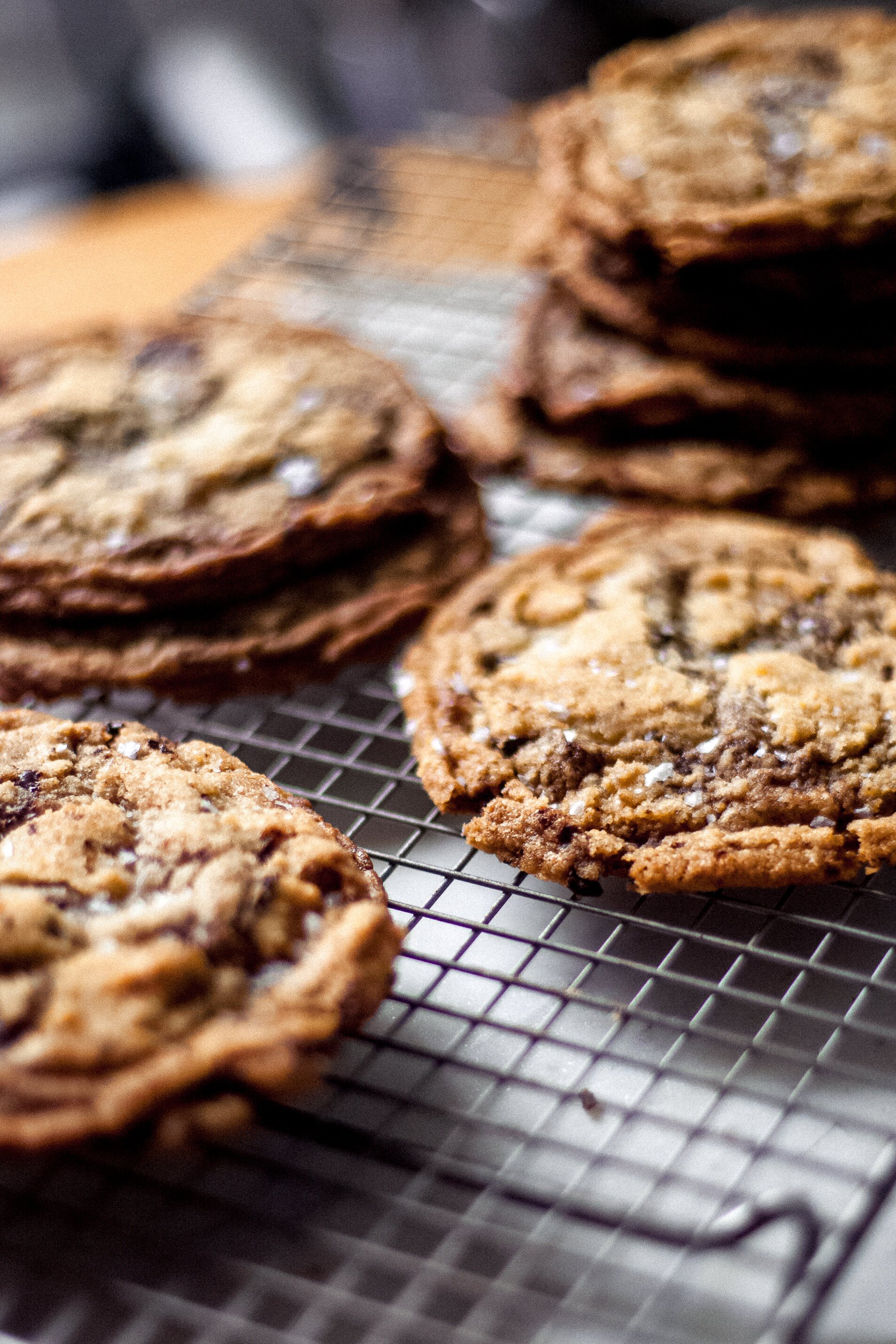
Drool-worthy golden ripples and crisp edges? ✔️

Sarah Keiffer’s Vanilla Bean Blog made these cookies famous — so famous that even Ina Garten included her version in a cookbook. They’re huge, dramatic, buttery, and rippled like the edges of a pie crust. But could I make them gluten-free, dairy-free, and egg-free without losing that chewy-meets-crisp perfection?

Challenge accepted.

🥄 Bakeover Notes

Sugar is the star.

These cookies get their golden color and crisp edges from sugar — mainly white sugar — which caramelizes as it bakes. That caramelization absorbs moisture and makes the cookies both chewy and crunchy. It’s also the secret behind those famous ripples. When you drop the baking pan mid-bake, the melted sugar pushes the dough outward, forming those iconic waves.

Use chopped chocolate, not chips.

Trust me on this one. Chopping a bar of bittersweet chocolate creates beautiful pools that spread better than chips. Plus, bittersweet and semisweet chocolates are naturally dairy-free — cocoa butter (despite the name) comes from the cocoa bean, not milk.

If you’re navigating allergens, check out brands that label their chocolate as gluten-, nut-, and soy-free. It makes a big difference.

Freeze the dough.

After scooping your dough, pop it in the freezer for about 15 minutes. This helps the centers stay gooey instead of flattening out completely while baking.

🌱 Allergy-Friendly Variations

Dairy-Free Butter

The main dairy ingredient here is butter, which is easily replaced.
My favorite brands: Miyoko’s European Style Butter or Earth Balance Vegan Unsalted Butter. I used Earth Balance for the cookies you see here.

Egg-Free Lift

Eggs provide lift and moisture in cookie dough, but this recipe only calls for one — perfect for replacing. My favorite substitute:

1½ tbsp water + 1½ tbsp oil (I use coconut or vegetable) + 1 tsp baking powder
Combine, stir, and add as you would an egg. You’ll see fizzing — that’s lift magic happening.
Gluten-Free Flour

This recipe doesn’t rely on much flour, so it’s a great candidate for a gluten-free swap.
I like to blend my own GF mix for control, but any quality all-purpose gluten-free blend works. Just remember:

  • Gluten-free dough spreads a little more

  • It may take longer to brown

  • And patience is your best friend — let them cool fully before biting in!

✨ The Result

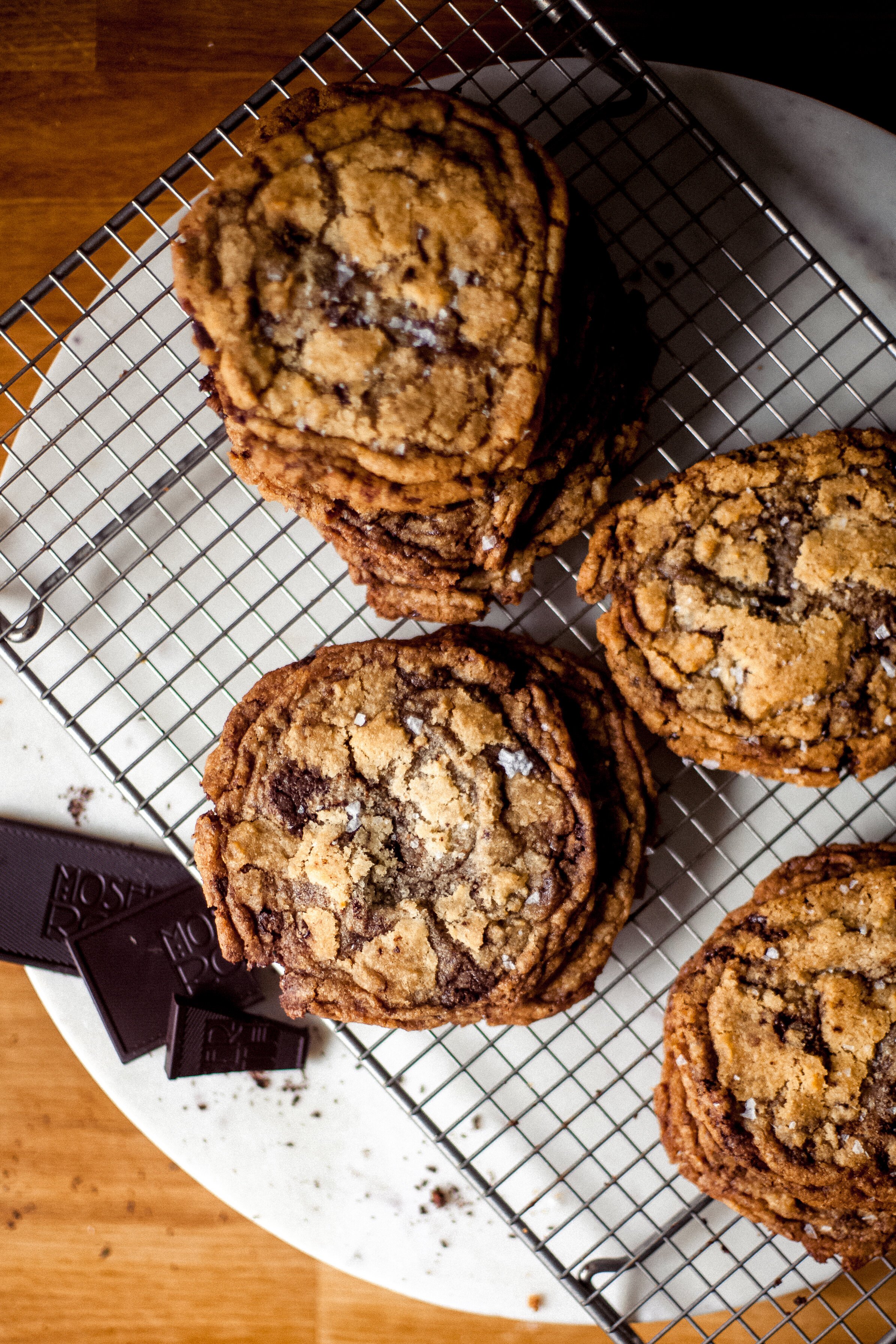
The cookies I photographed here are gluten-free, dairy-free, and egg-free. BELIEVE YOUR EYES, FRIENDS.

They’re crispy on the edges, soft in the middle, and full of rich, bittersweet chocolate ripples. You’d never guess they’re allergen-friendly — and that’s the point.

Bakeovers aren’t about compromise. They’re about inclusion without losing flavor, texture, or joy.


💯 Gluten & Dairy-Free Pan-Banging Chocolate Chip Cookies (Bakeover)

Author: Alicia Sturdy | Inspired by: Sarah Keiffer, The Vanilla Bean Blog

Category: Cookies | Dietary: Gluten-Free, Dairy-Free, Egg-Free

GF Flour Blend

  • 84g White Rice Flour
  • 84g Brown Rice Flour
  • 42g Potato Starch
  • 42g Tapioca Starch
  • 14g Potato Flour
  • 8g Xanthan Gum
  • 8g Pectin

Cookie Dough Ingredients

  • 12g (1 tsp) baking soda
  • 5g (1 tsp) kosher salt
  • 225g unsalted vegan butter, at room temperature (2 sticks)
  • 300g granulated sugar
  • 50g light brown sugar
  • Equivalent of 1 egg: mix 1.5 tbsp water + 1.5 tbsp oil + 1 tsp baking powder
  • 2 tablespoons water
  • 170g bittersweet chocolate (I prefer Guittard), chopped into ½-inch pieces (about 6 oz)

Materials

  • Stand mixer
  • Kitchen scale
  • Small and medium bowls
  • Cutting board & knife
  • Spatula
  • 2 ¾ oz cookie scoop or ⅓ cup measure
  • Foil
  • Sheet pan

Instructions

  1. Preheat oven to 350°F and position the rack in the middle of the oven.
  2. Line your baking sheet with aluminum foil, dull side facing up.
  3. In a small bowl, weigh and combine your dry ingredients: flour(s), baking soda, and salt. Set aside.
  4. In a stand mixer fitted with the paddle attachment, beat butter on medium speed until creamy.
  5. Add both sugars and continue beating until light and fluffy, about 2–3 minutes.
  6. Scrape down the sides of the bowl and paddle. Add the egg (or replacement), vanilla, and water. Mix on low to combine.
  7. Scrape the bowl again, then add the dry ingredients and mix on low until just combined.
  8. Add chopped chocolate and mix on low to incorporate.
  9. Using a cookie scoop or ⅓ cup measure, portion dough (about 100g each). Place four dough balls evenly spaced on the prepared baking sheet.
  10. Freeze the sheet pan for 15 minutes before baking. Continue scooping remaining dough and freezing while the first batch bakes.
  11. Bake for 10 minutes, until centers are slightly puffed. Open the oven and lift the pan about 4 inches, then gently drop it to create ripples. Repeat every 2 minutes until cookies bake 16–18 minutes total.
  12. Cookies should be golden brown with lighter centers that appear underbaked—this is perfect!
  13. Transfer the baking sheet to a wire rack and cool completely before removing cookies.
  14. Note: For gluten-free cookies, carefully transfer the foil (with cookies still on it) to the rack to cool fully and preserve structure.

These gluten-, dairy-, and egg-free cookies have irresistibly crisp edges, gooey centers, and that signature pan-banged ripple. Proof that everyone deserves dessert night. 🍪
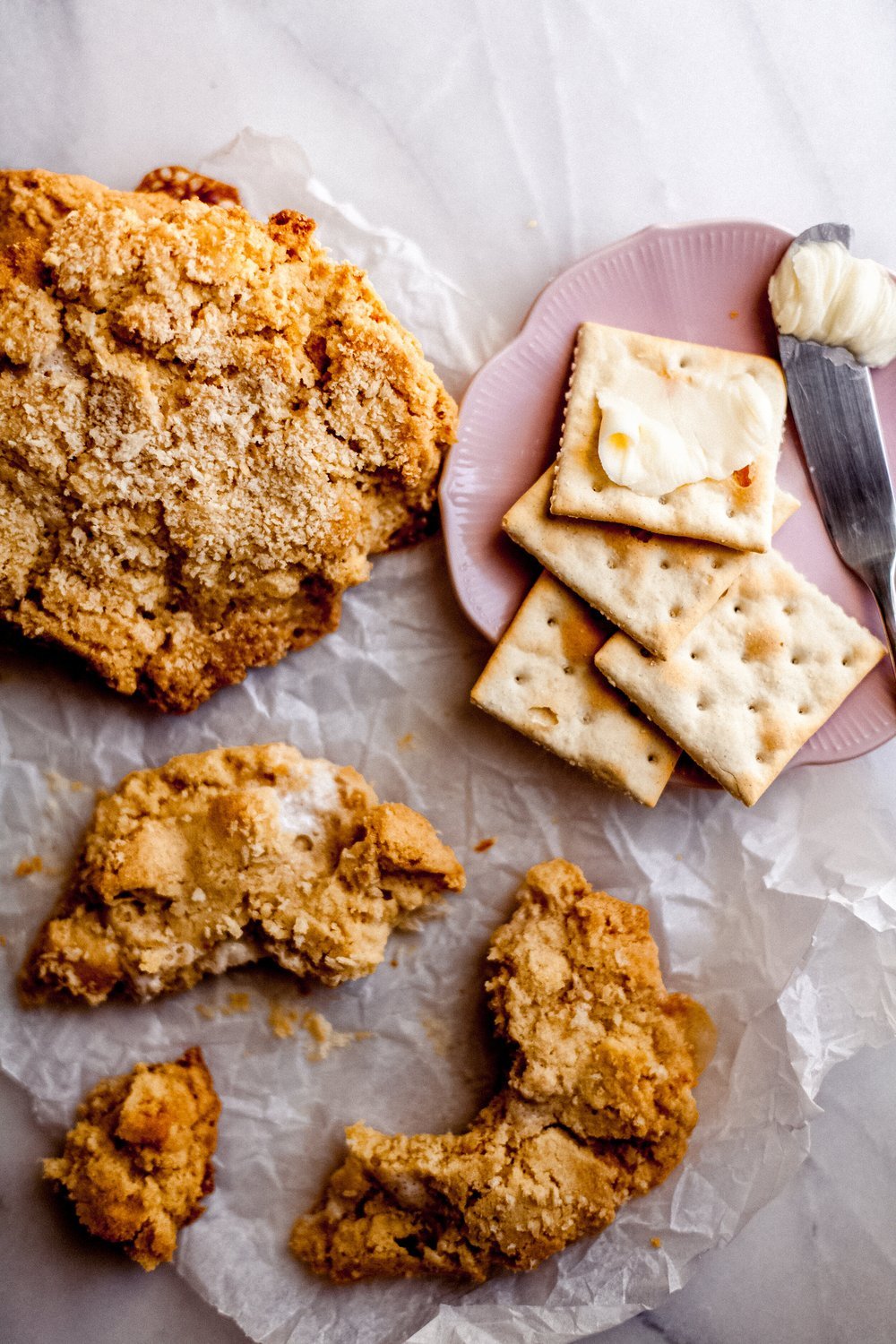
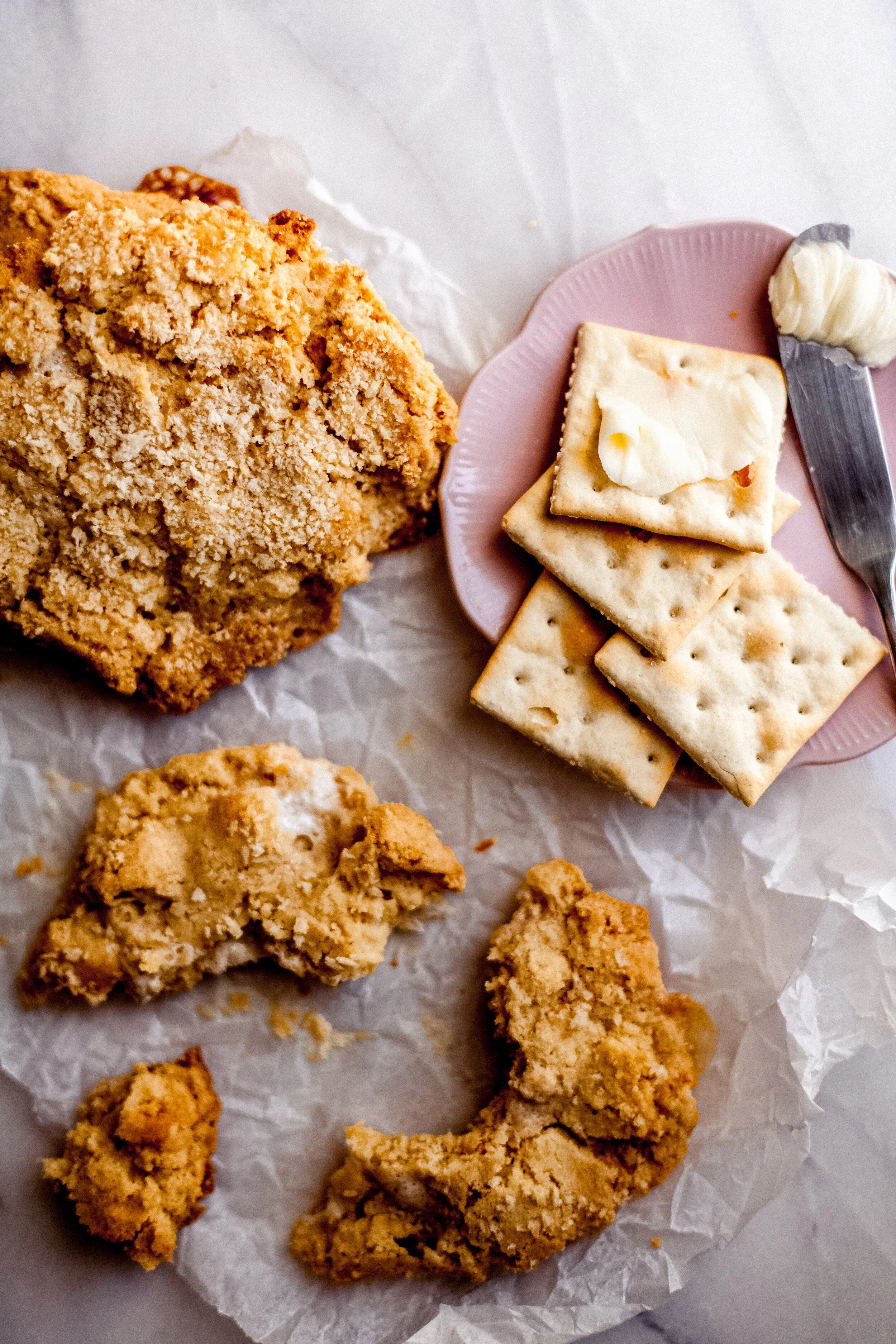
Buttered Saltine Crunch Cookie

I sat on the cream linoleum floor, curled up next to the cast iron wood stove to warm my frozen toes fresh from my sopping wet boots. I had just come in from an afternoon in the snow, exploring the woods at my grandma's house in northern Michigan. The afternoon of this memory isn't one snowy day in particular. It's an entire season filled with memories of American Girl books, Anne of Avonlea rentals, and this flavor memory I hold so dearly.

Buttered saltine crackers in my grandma's kitchen.

This spring, I enrolled in Christina Tosi's Monthly course on creative baking. I wanted to flex my culinary education muscles and get inspired by someone I admire while creating a collection of baking courses due out over the next year. The goal of the course is to learn Christina’s recipes and then be inspired to write your own. Honestly, the only recipe I’ve ever taken 100% credit for writing from scratch is the Martian Mallow sundae at Scoops, the ice cream shop I worked at in high school. Other than that, my recipes have been minor riffs on other recipes I've known and loved.

While this recipe starts with a riff on a recipe from the class, it digs deep into my own flavor story centered around this memory. Entire sleeves of Saltines, being devoured along with a sidecar of Fleishman's. My cookie goals were as follows. 

1. To mimic the crunchy familiar feeling of the crackers.

2. To fill the flour with the powdery saltiness that is signature to Saltines.

3. Nail the gooeyness of room temperature butter slathered on those perfect little bites.

This recipe, of course, is Everybody approved with variations from traditional to gluten and dairy free. Choose your ingredient list below and get baking!

Please note, I'm going to be writing recipes using grams instead of cups measurements for dry ingredients from now on. I highly recommend you purchase a kitchen scale. I've had this scale for over a decade, bought on a whim from the clearance section at Sur La Table - it has not disappointed!


Buttered Saltine Crunch Cookies

Author: Alicia Sturdy | Category: Cookies | Inclusive Baking: Options for Gluten-Free & Dairy-Free

This cookie recipe is for all bakers — whether you bake traditionally, gluten-free, or dairy-free. Substitutions are clearly noted so everyone can enjoy the same crisp, gooey, brown-butter magic.

Brown Butter Saltine Crunch

  • 65 g Schär Gluten-Free Table Crackers (or regular Saltines)
  • 15 g soy, coconut, or traditional milk powder (about ⅓ cup + 1 Tbsp)
  • 2 g kosher salt (¾ tsp)
  • 50 g browned butter — for dairy-free, use Miyoko's European-style vegan butter (it’s the only one that will brown properly)

Cookie Dough Ingredients

  • 225 g unsalted butter, at room temperature (2 sticks)
  • 300 g granulated sugar
  • 100 g light brown sugar
  • 1 egg — or substitute: 1.5 tbsp water + 1.5 tbsp oil + 1 tsp baking powder
  • 1 cup all-purpose flour or Gluten-Free Flour Blend (see below)
  • 65 g mini marshmallows
  • 60 g panko bread crumbs (Kikkoman brand recommended)

Gluten-Free Flour Blend

  • 40 g White Rice Flour
  • 24 g Cornstarch
  • 22 g Brown Rice Flour
  • 20 g Tapioca Starch
  • 18 g Non-Fat Dry Milk
  • 4 g Potato Starch
  • 3 g Xanthan Gum
  • 130 g ground Schär Gluten-Free Table Crackers (or Saltines)
  • 3 g baking soda (¼ tsp)
  • 5 g kosher salt (1½ tsp)

Materials

  • Stand mixer
  • Kitchen scale
  • Small and medium bowls and containers
  • Spatula
  • 2¾ oz cookie scoop or ⅓ cup measure
  • Parchment paper
  • Sheet pan

Instructions

  1. Make the Brown Butter Saltine Crunch:
    Preheat oven to 275°F. In a saucepan over medium-low heat, brown the butter until nutty and golden. Set aside.
  2. Place crackers in a bowl and crush into half-inch or smaller pieces. Add milk powder and salt; toss to combine.
  3. Pour browned butter over crackers and toss to coat. Spread evenly on a parchment-lined sheet pan. Bake 20 minutes, then cool until golden and crisp.
  4. Make the Cookie Dough:
    Preheat oven to 375°F. Pulverize 130 g saltines (or crackers) in a food processor until fine and powdery.
  5. Cream butter and sugars together in a stand mixer on medium-high for 3 minutes.
  6. Scrape down sides; add egg (or substitute) and beat on high for 7–8 minutes until pale and fluffy.
  7. In a separate bowl, whisk flour, pulverized crackers, baking soda, and salt together.
  8. With the mixer on low, add dry ingredients and mix until no dry bits remain.
  9. Add cooled Brown Butter Cracker Crunch and mini marshmallows. Mix on low until evenly distributed.
  10. Scoop 2¾ oz portions (about 78 g each). Roll each in panko breadcrumbs and flatten slightly into puck shapes.
  11. Arrange on parchment-lined sheets with 2 inches between cookies. Chill for 10 minutes.
  12. Bake 12 minutes or until tops are golden brown. Cool on the pan for 10–15 minutes before transferring — they’ll firm up as they cool.

Tip: These cookies are soft right out of the oven — let them rest fully before moving. The chewy centers and crisp edges make them irresistible for every kind of baker. 🍪


buttered-saltine-crunch-cookie-3.jpg


Vanilla Bean Scone Challenge
 

If you’re new to Everybody Baking Co…

you might have noticed that we strive to celebrate Equal Opportunity Treats for All. That anyone with any type of food preference, intolerance, or skill level could come and find something incredible to bake.

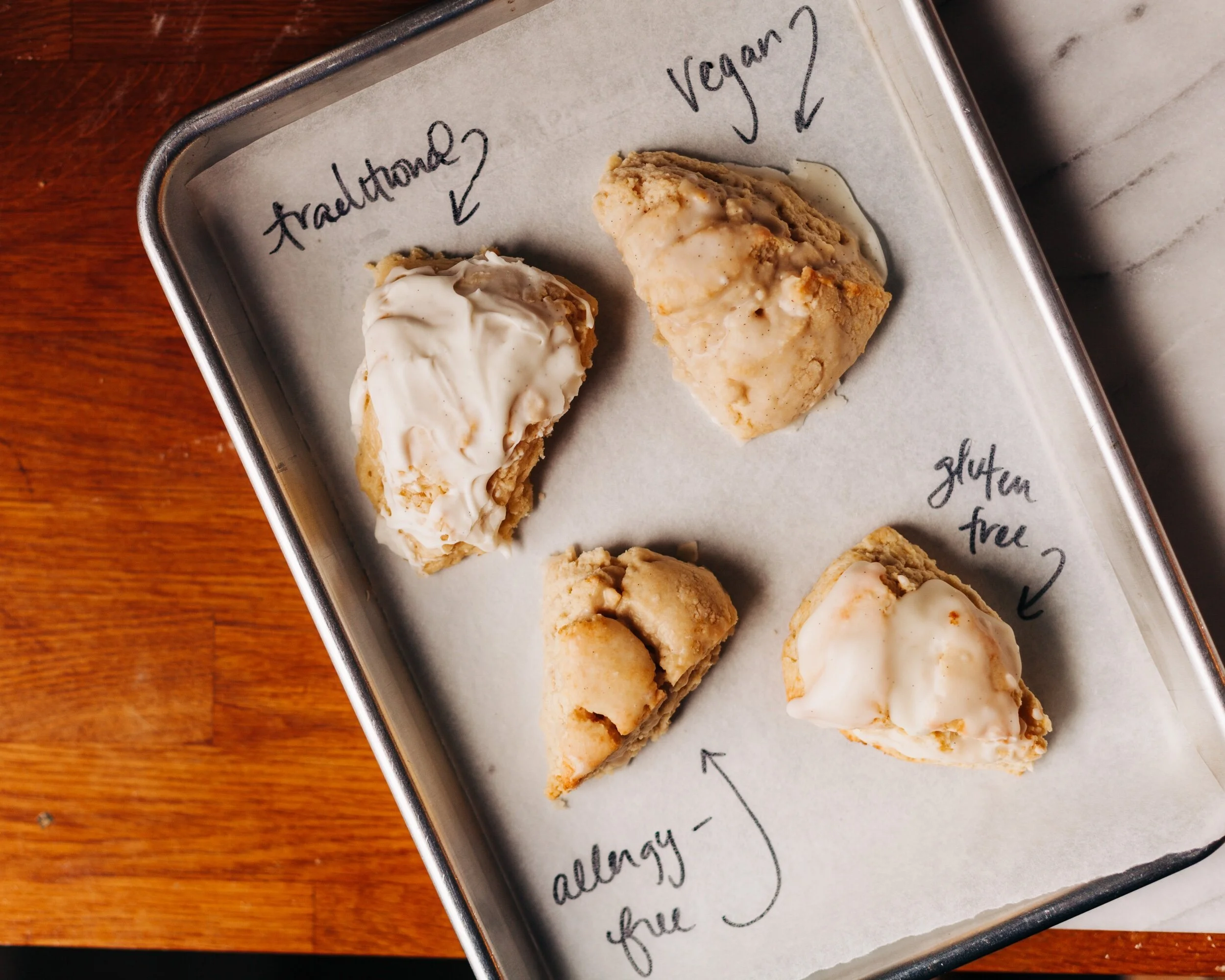
For months I’ve been wrestling with this question “What does Equal Opportunity baking really mean?” - and the picture above is a manifestation of my processing. One recipe, four ways to get to that result.

Just to remind you, we have:

🥐traditional (flour eggs milk butter - all fair game)

✨vegan (flour is cool but you avoid butter eggs and milk)

🌈gluten free (avoiding flour but embracing milk butter and eggs)

💯allergy free (using alternatives to flour, milk, eggs and butter in all circumstance)

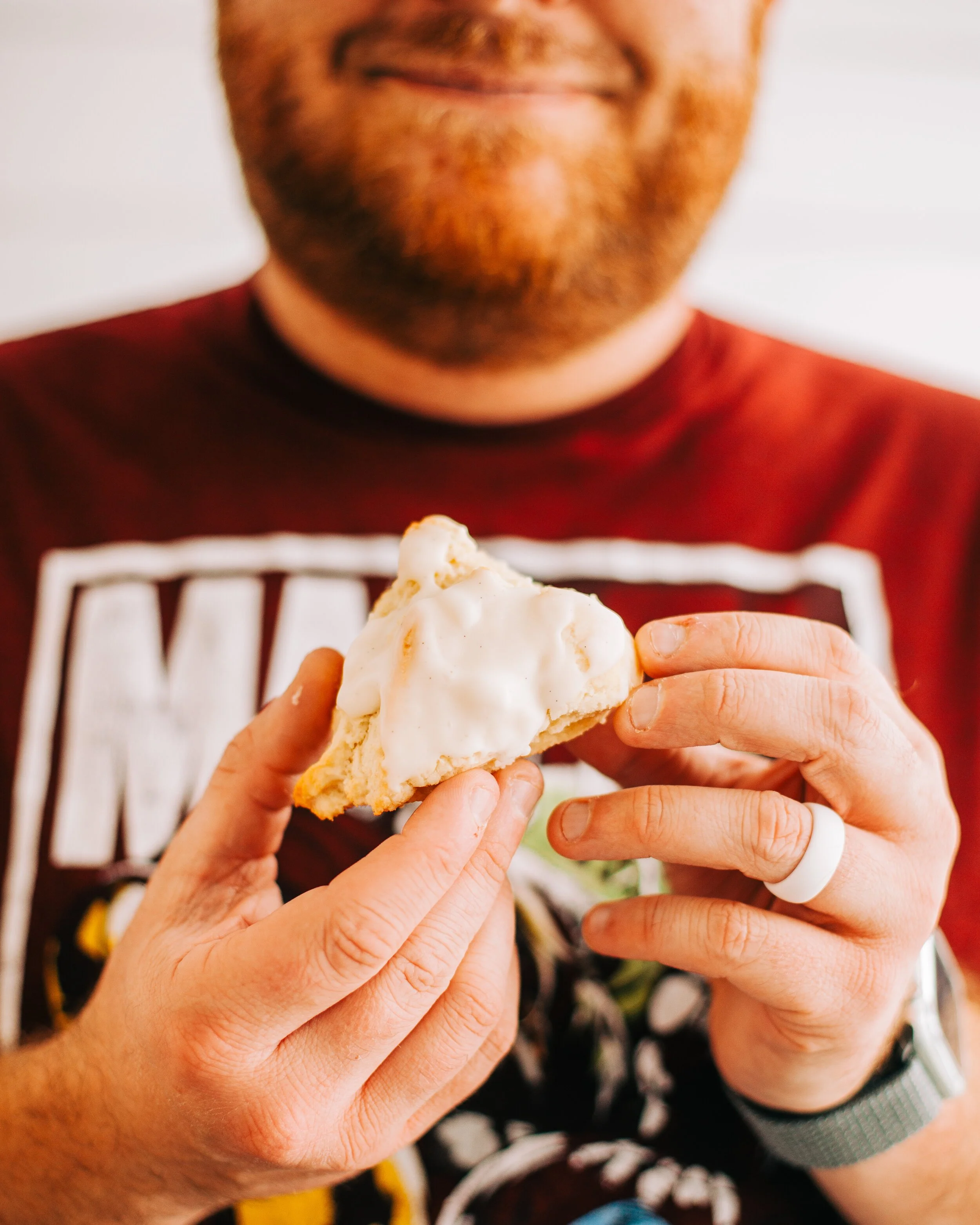
And just to note, they all taste incredible (my family got the full sheet pan of 32 scones and everyone agreed that while all of them were tasty, the Gluten Free were the BEST in show).

So I give you the first in this series - and I’d love to hear what you think. Here’s your homework if you’re up for the challenge:

Scone Homework!

  1. Choose a recipe that fits your baking style (🥐Traditional, ✨Vegan, 🌈Gluten Free or 💯Allergy Free).

  2. Bake it til’ you make it! Enjoy the process and the results of your scone of choice.

  3. Post your Scone on Instagram and use the hashtag #everybodybakescones so we can celebrate our community bakes!

jump to your recipe of choice: TRADITIONAL | GLUTEN FREE | VEGAN | ALLERGY-FREE

🥐traditional

🖨get the traditional recipe

Dough:

  • 1 egg

  • ¾ cup cream

  • 1 tbsp apple cider vinegar

  • 2 tsp vanilla extract

  • 3 cups All-Purpose Flour

  • ½ cup sugar

  • 2 tbsp baking powder

  • ¼ tsp salt

  • 200g Fat

    • 1 stick butter (about ~110 g)

    • 1 stick shortening (about ~90g)

Glaze:

  • 1 cup powdered sugar

  • ¼ cup cream

  • ½ tsp vanilla bean paste or extract

Method

Dough!

  1. Preheat the oven to 350 degrees F.

  2. Stir together cream, apple cider vinegar, and vanilla extract in a measuring cup until it’s one mixture. Set aside for 10 minutes.

  3. Measure and whisk together the flour, sugar, baking powder, and salt. Cut the butter and shortening into cubes - add to the flour mixture and use a pastry cutter or your fingers to break up the fat into the flour (I like to think of this as I’m squishing flour into the fat pieces). Continue until the flour looks like coarse sand.

  4. Add the egg to the cream mixture and mix until egg is incorporated. Add to flour mixture and mix with your hands, prioritizing pulling the flour at the bowl’s bottom into the mix. Keep mixing until a rough dough forms; it’s okay if it’s still a little crumbly - that’s what we’re going for!

  5. Flour your counter or board, and dump the dough out and lightly press it all together in one big round. With a rolling pin, roll it out until it’s anywhere from ½ to 1 inch thick (I prefer a thicker scone, so I’m always more on the 1-inch side)

  6. Cut into eight wedges with a sharp knife and place on a baking sheet lined with parchment to bake for 18 minutes or until they’re golden brown. Cool for 15 minutes on the cookie sheet, and then lift the parchment over to a cooling rack for the next step (makes cleanup for the next part super easy).

Glaze!

  1. Measure out the cream in a measuring cup and add the vanilla bean paste (this gives it those beautiful bean bits! But you can use extract). Add powdered sugar and whisk with a fork until the mixture is smooth. It shouldn’t be thick like frosting (see my frosting example in my photo…it’s too thick), but it should not be water - it should coat the smooth part of the back of the fork. Adjust powdered sugar or milk quantities to get the consistency right.

  2. With a spoon, take a level spoonful of glaze and glaze each scone.

  3. Allow the glaze to set, about an hour.

🌈gluten free

🖨get the gluten free recipe

Dough:

  • 1 egg

  • ¾ cup cream

  • 1 tbsp apple cider vinegar

  • 2 tsp vanilla extract

  • 3 cups 1:1 or Cup for Cup Gluten Free Flour that contains xantham or guar gum (RiceFlour based blend preferred)

  • ½ cup sugar

  • 2 tbsp baking powder

  • ¼ tsp salt

  • 200g Fat

    • 1 stick butter (about ~110 g)

    • 1 stick shortening (about ~90g)

Glaze:

  • 1 cup powdered sugar

  • ¼ cup cream

  • ½ tsp vanilla bean paste or extract

Method

Dough!

  1. Preheat the oven to 350 degrees F.

  2. Stir together cream, apple cider vinegar, and vanilla extract in a measuring cup until it’s one mixture. Set aside for 10 minutes.

  3. Measure and whisk together the flour, sugar, baking powder, and salt. Cut the butter and shortening into cubes - add to the flour mixture and use a pastry cutter or your fingers to break up the fat into the flour (I like to think of this as I’m squishing flour into the fat pieces). Continue until the flour looks like coarse sand.

  4. Add the egg to the cream mixture and mix until egg is incorporated. Add to flour mixture and mix with your hands, prioritizing pulling the flour at the bowl’s bottom into the mix. Keep mixing until a rough dough forms; it’s okay if it’s still a little crumbly - that’s what we’re going for!

  5. Flour your counter or board, and dump the dough out and lightly press it all together in one big round. With a rolling pin, roll it out until it’s anywhere from ½ to 1 inch thick (I prefer a thicker scone, so I’m always more on the 1-inch side)

  6. Cut into eight wedges with a sharp knife and place on a baking sheet lined with parchment to bake for 18 minutes or until they’re golden brown. Cool for 15 minutes on the cookie sheet, and then lift the parchment over to a cooling rack for the next step (makes cleanup for the next part super easy).

Glaze!

  1. Measure out the cream in a measuring cup and add the vanilla bean paste (this gives it those beautiful bean bits! But you can use extract). Add powdered sugar and whisk with a fork until the mixture is smooth. It shouldn’t be thick like frosting, but it should not be water - it should coat the smooth part of the back of the fork. Adjust powdered sugar or milk quantities to get the consistency right.

  2. With a spoon, take a level spoonful of glaze and glaze each scone.

  3. Allow the glaze to set, about an hour.

✨vegan

🖨get the vegan recipe PDF

Dough:

  • 1/4 cup dairy free yogurt

  • 3/4 cup dairy free milk

  • 1 tbs apple cider vinegar

  • 2 tsp vanilla extract

  • 3 cups All-Purpose Flour

  • ½ cup sugar

  • 2 tbsp baking powder

  • ¼ tsp salt

  • 200g Fat

    • 1 stick earth balance Unsalted baking stick (about ~110 g)

    • 1 stick shortening (about ~90g)

Glaze:

  • 1 cup powdered sugar

  • 1 tbsp dairy free milk

  • ½ tsp vanilla bean paste or extract

Method

Dough!

  1. Preheat the oven to 400 degrees F.

  2. Stir together yogurt, milk, apple cider vinegar, and vanilla extract in a measuring cup until it’s one mixture. Set aside for 10 minutes.

  3. Measure and whisk together the flour, sugar, baking powder, and salt. Cut the butter and shortening into cubes - add to the flour mixture and use a pastry cutter or your fingers to break up the fat into the flour (I like to think of this as I’m squishing flour into the fat pieces). Continue until the flour looks like coarse sand.

  4. Add the yogurt mixture to flour mixture and mix with your hands, prioritizing pulling the flour at the bowl’s bottom into the mix. Keep mixing until a rough dough forms; it’s okay if it’s still a little crumbly - that’s what we’re going for!

  5. Flour your counter or board, and dump the dough out and lightly press it all together in one big round. With a rolling pin, roll it out until it’s anywhere from ½ to 1 inch thick (I prefer a thicker scone, so I’m always more on the 1-inch side)

  6. Cut into eight wedges with a sharp knife and place on a baking sheet lined with parchment to bake for 13 minutes or until they’re golden brown. Cool for 15 minutes on the cookie sheet, and then lift the parchment over to a cooling rack for the next step (makes cleanup for the next part super easy).

Glaze!

  1. Measure out the dairy free milk in a measuring cup and add the vanilla bean paste (this gives it those beautiful bean bits! But you can use extract). Add powdered sugar and whisk with a fork until the mixture is smooth. This tends to be a little runny, but you can play with the recipe to adjust powdered sugar or milk quantities to get the consistency right.

  2. With a spoon, take a level spoonful of glaze and glaze each scone.

  3. Allow the glaze to set, about an hour.

💯allergy free

🖨get the allergy free recipe

Dough:

  • 1/4 cup dairy free yogurt

  • 3/4 cup dairy free milk

  • 1 tbs apple cider vinegar

  • 2 tsp vanilla extract

  • 3 cups 1:1 or Cup for Cup Gluten Free Flour that contains xantha or guar gum (RiceFlour based blend preferred)

  • ½ cup sugar

  • 2 tbsp baking powder

  • ¼ tsp salt

  • 200g Fat

    • 1 stick Earth Balance Unsalted baking stick (about ~110 g)

    • 1 stick shortening (about ~90g)

Glaze:

  • 1 cup powdered sugar

  • 1 tbsp dairy free milk

  • ½ tsp vanilla bean paste or extract

Method

Dough!

  1. Preheat the oven to 400 degrees F.

  2. Stir together yogurt, milk, apple cider vinegar, and vanilla extract in a measuring cup until it’s one mixture. Set aside for 10 minutes.

  3. Measure and whisk together the flour, sugar, baking powder, and salt. Cut the butter and shortening into cubes - add to the flour mixture and use a pastry cutter or your fingers to break up the fat into the flour (I like to think of this as I’m squishing flour into the fat pieces). Continue until the flour looks like coarse sand.

  4. Add the yogurt mixture to flour mixture and mix with your hands, prioritizing pulling the flour at the bowl’s bottom into the mix. Keep mixing until a rough dough forms; it’s okay if it’s still a little crumbly - that’s what we’re going for!

  5. Flour your counter or board, and dump the dough out and lightly press it all together in one big round. With a rolling pin, roll it out until it’s anywhere from ½ to 1 inch thick (I prefer a thicker scone, so I’m always more on the 1-inch side)

  6. Cut into eight wedges with a sharp knife and place on a baking sheet lined with parchment to bake for 13 minutes or until they’re golden brown. Cool for 15 minutes on the cookie sheet, and then lift the parchment over to a cooling rack for the next step (makes cleanup for the next part super easy).

Glaze!

  1. Measure out the dairy free milk in a measuring cup and add the vanilla bean paste (this gives it those beautiful bean bits! But you can use extract). Add powdered sugar and whisk with a fork until the mixture is smooth. This tends to be a little runny, but you can play with the recipe to adjust powdered sugar or milk quantities to get the consistency right.

  2. With a spoon, take a level spoonful of glaze and glaze each scone.

  3. Allow the glaze to set, about an hour.

Cardamom Love Buns

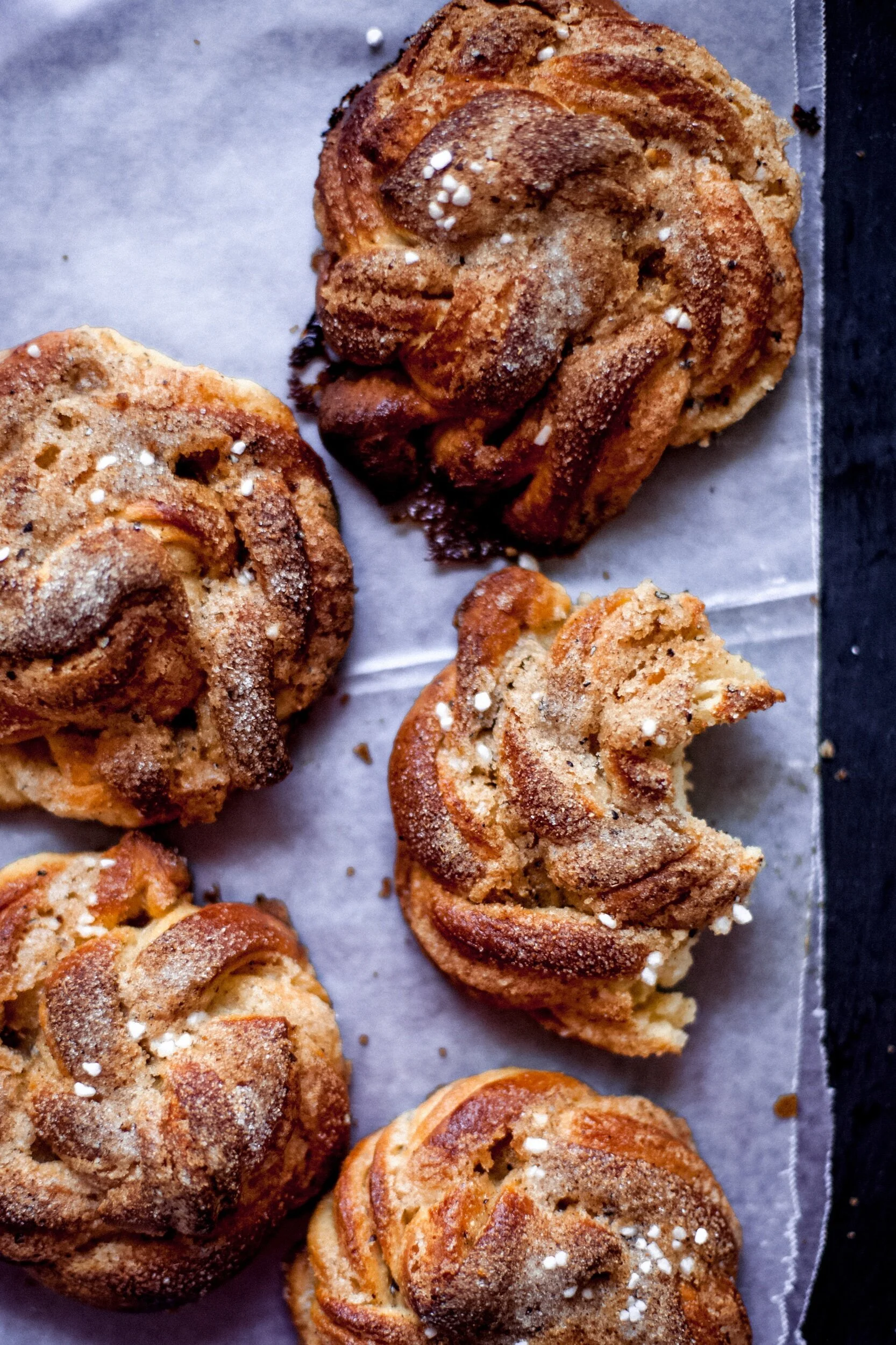
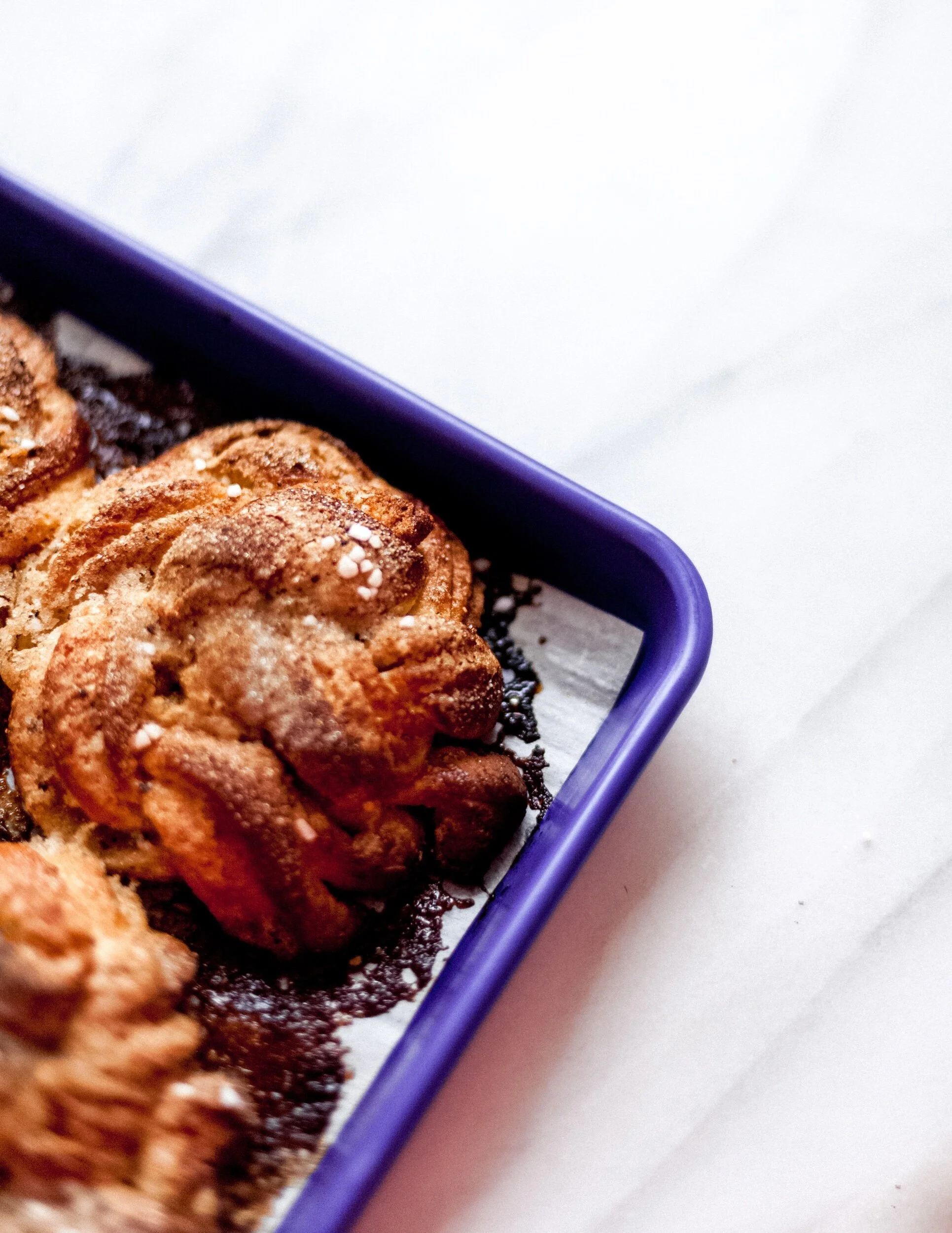
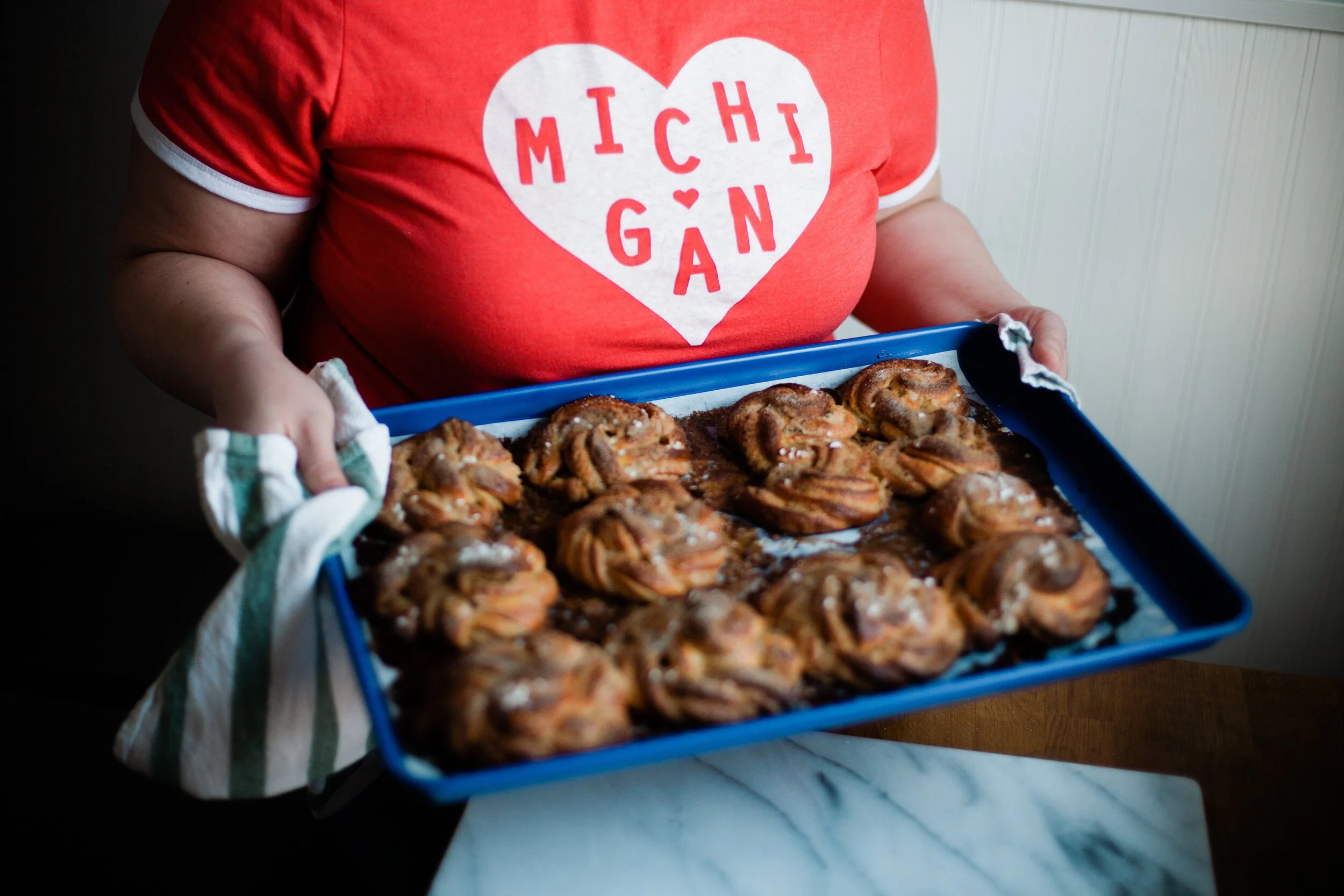
I’m going to be honest, I had only ever had one cardamom bun before I made them. After the labor of love (I’m an impatient person - rising dough can be a labor!), they came out of the oven and I couldn’t resist. Crunchy on the outside, soft and fluffy on the inside with flecks of cardamom seeds in the filling, I find these buns so satisfying. If you prefer cinnamon to cardamom, you can sub that in but I encourage you to give this Scandinavian spice a try.

Why are they called love buns? My niece is 18 months old - not an age where cardamom is easy on the pallet unless you’ve got Scandinavian blood. Well, she got a hold of a cardamom bun and had 3. THREE! I want to name this recipe in honor of her - because she loves them, because I love her, and her last name - Lovejoy.

INGREDIENTS

DOUGH

1 cup whole milk

1 tablespoon active dry yeast

1/4 cup warm water (110F)

1/2 cup sugar

1 teaspoon crushed cardamom seeds

1 teaspoon kosher salt

2 large eggs at room temp**

4.5 cups unbleached all purpose flour

1 stick (4 oz) unsalted butter, melted

FILLING

1 cup + 2 tbsp unsalted butter, room temp

1 cup sugar

1 tablespoon ground cardamom (powder)

1 tablespoon crushed cardamom seeds

1/4 teaspoon kosher salt

TOPPING

1 large egg

1 teaspoon cardamom seeds, crushed

2 teaspoons ground cardamom (powder)

3 tablespoons sugar

Making the Dough

1. Scald the milk in a small saucepan (milk scalds at 181F). Remove pan from heat and cool to anywhere between 105-115*F.

2. While the milk heats, add 1 tablespoon (YEP) dry active yeast to 1/4 cup warm water (about 110F) to your stand mixer bowl. It's ready to go (about 5 mins tops) when the yeast is dissolved and creamy.

3. Whisk the milk, sugar, cardamom (both types, if using), salt, and eggs into the yeast mixture. Put the bowl on stand mixer with the dough hook attachment and add 2 cups of the flour until smooth. Pour in melted butter, and turn the mixer back on until the butter is incorporated. Add in remaining flour, 1/2 cup at a time. Do this until the dough is pulling away from the sides of the bowl.

*If it's still a little sticky, flour your counter lightly and turn the dough out. Knead in up to another 1/2 cup of flour by hand until the dough feels silky and compact.

4. Line a sheet pan with parchment and loosely shape the dough into a flat rectangle. Slash the top lightly with a knife, 3 times about 1/4 inch deep. Cover dough with plastic wrap and place in the fridge to chill for 2 hours.

5. While the dough is in the fridge, make the filling. Using the paddle attachment of a stand mixer, cream the butter, salt, cardamom, and sugar (don't over mix). Set aside (don't refrigerate! you want this to be room temp).

6. Line two-13x18 baking sheets with parchment paper, and set aside.

7. Remove the dough from the fridge at the end of the two hours and let it sit out for a few minutes, so it's easier to roll out. Place dough on a lightly floured surface and roll out to about a 15x18 inch rectangle (about 1/8-inch thick). Lift the dough as you roll out to re-flour the underside of the dough, so it doesn't stick.

8. Divide up the creamed butter filling in little chunks across the whole dough and spread with a spatula or your clean hands across the whole surface of the dough.

9. Face the 15-inch side towards you (so the dough is running north/south from where you stand) and fold the top third over the middle third, and then fold the bottom third up over the middle as well like a letter.

10. Roll the dough vertically to flatten the edges - you can stretch it to size, about a 12x16 rectangle (this time the dough is facing east/west from where you stand). If any filling oozes out, wipe it away with a spatula to prevent a sticky surface.

11. Use a pizza cutter to cut the dough in half. Continue to cut the halves in half until you have 16 strips. Working with one strip at a time, cut it in half with the pizza cutter leaving the two strands connected at the top (about a 1/2 inch).

12. Twist the two strands over one another to form one twisted strand 'braid.' Coil the 'braid' in a circle and tuck the loose end under the bun. Place on your baking sheet and continue until all the strands are braided & coiled. Space the buns out evenly, and leave them to proof at room temp for about 1 hour. Then the dough should rise & become soft.

13. Preheat oven to 450 degrees (425 if you're using convection)

14. When the buns have proofed, make the topping. Whisk the egg together with 1 tablespoon water with a fork until combined.

15. Whisk the sugar and cardamom together until sandy looking. Lightly brush each bun with egg wash and sprinkle the sandy sugar on top (don't be shy, I recommend anywhere from 1/2 to 1 teaspoon per bun). For the finishing touch - sprinkle some Swedish Pearl Sugar on top, but if you can't find it, it's not necessary.

16. Bake for 8 minutes and then lower the temp to 375, rotating the trays (turn the tray 180 degrees and rotate the top and bottom trays to ensure even baking). Lower the temp ensures the buns bake all the way through, but the outside doesn't burn. Bake for an additional 12 minutes.

*(if you're worried about the buns burning, you can cover the trays with a piece of parchment paper towards the end once they've reached the golden brown color.

17. Let the buns cool for 10 minutes before eating, so the melted sugar has a chance to harden. Remove any lacy sugar around the outside before serving. Enjoy!

BunsTraditionalComment